
Alt Trading: FuturesOne V2
Nov 26, 2025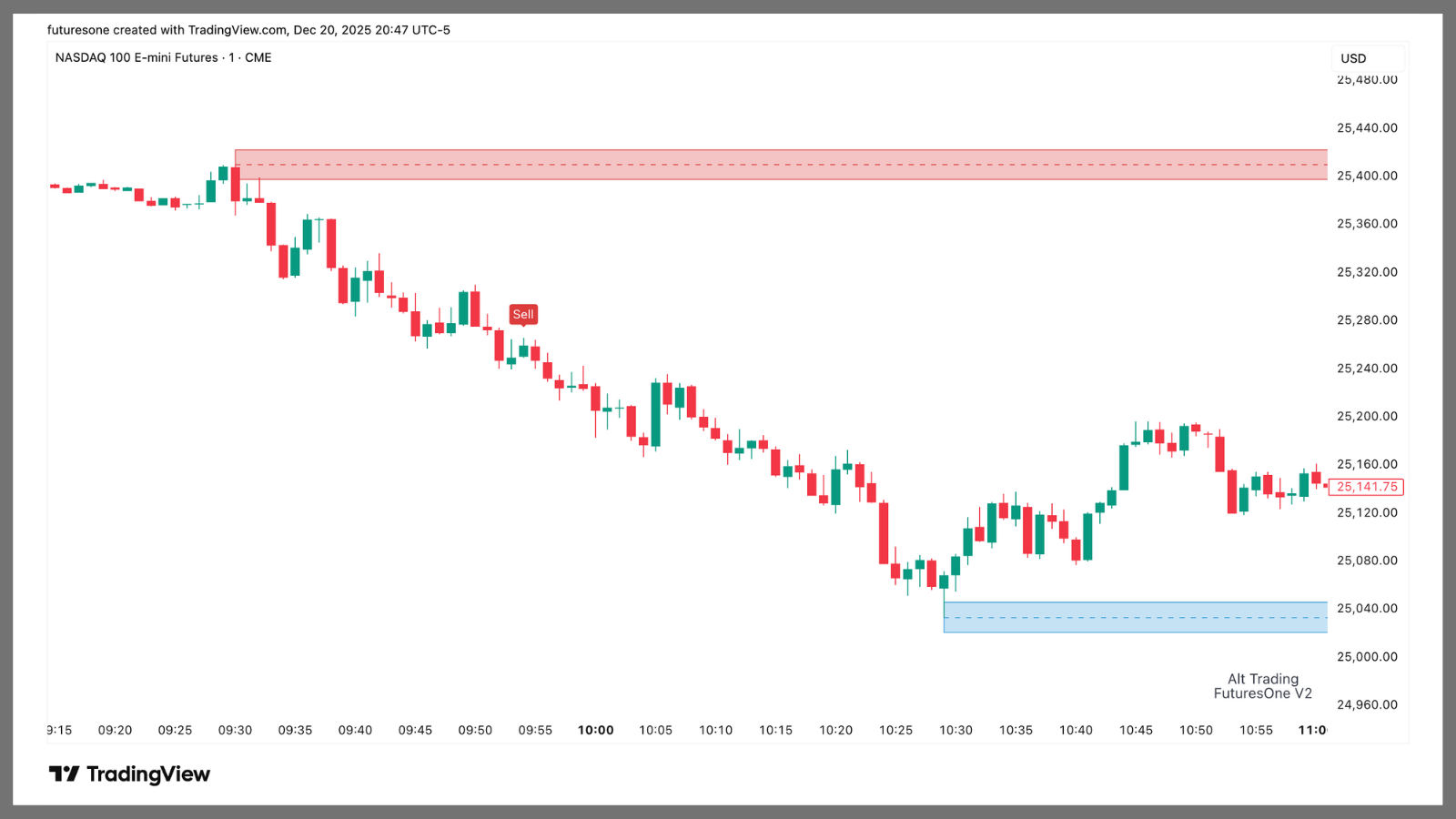
Works on the following platforms:
TradingView
For use on the TradingView platform
The FuturesOne Indicator + Strategy will be continuously enhanced to ensure our users receive the most effective and profit-focused trading system at the best possible value. FuturesOne V2 (Core Model) is a stats-first rebuild of the system's internals.
Instead of adding more "modes" or chasing more signals, we did a distribution-level diagnosis of the 1-year backtest to answer three questions: Why does it make money? Where does it leak? What changes improve stability without turning it into a swing/trend system?
What the Statistical Analysis Showed
This is a high hit-rate system with a thin cushion. The performance profile is characteristic of a prop-friendly scalping edge: frequent winners, but losses can be larger when things go wrong. That means the edge can be "fragile" if left-tail losses (bigger losers) aren't controlled and if average wins don't have a path to expand.
Not all setups are equal. Bucket/segment analysis made it clear the strategy is not one uniform edge—there are sub-components with meaningfully different expectancy. V2 prioritizes the highest-quality subset and reduces exposure to weaker conditions.
Speed matters. Trade-duration behavior indicated most outcomes resolve quickly, and the biggest damage happens during fast snapbacks. That pointed to improvements in how risk is managed after a trade proves itself—without choking the win rate early.
What V2 Changes (in Plain English)
1) Quant Mode removed — the "best parts" are now always on
We retired the mode switch and merged the research-backed rules into a single Core Model so execution is consistent and the system doesn't rely on users selecting the "right" mode.
2) Expectancy improvements through payoff "shape," not signal overhaul
V2 focuses on distribution shaping: keeping the frequent base hits while creating controlled upside and reducing left-tail events. The idea is to improve average outcomes and reduce dependence on an exceptionally high win rate.
3) Segment-weighting improvements
Instead of treating every setup as equally valuable, V2 emphasizes the sub-strategy with the strongest observed performance characteristics and tightens participation in the segments that historically contributed less.
4) Prop-style stability upgrades
V2 is built to behave better under real evaluation/payout constraints: controlling trade frequency and drawdown clustering so performance is less "spiky" and more repeatable.
Why This Matters
V1 was powerful, but V2 is more refined: the model is now designed around what the statistics said would make it more durable in live conditions—without morphing into a slow, trend-following system.
As always, FuturesOne will keep evolving with real testing and user feedback.
How to Trade with FuturesOne V2
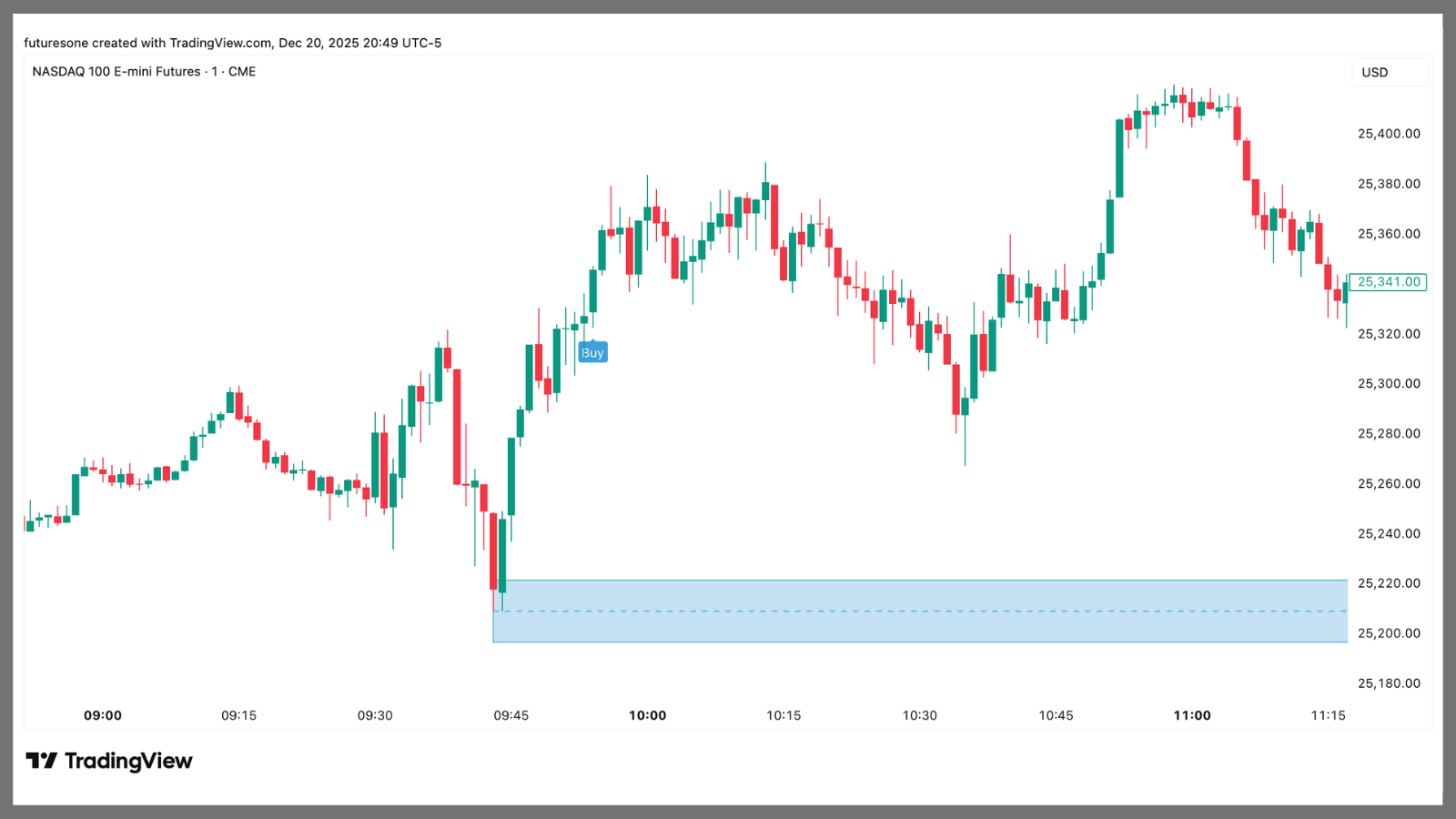
FuturesOne V2 operates with a single Core Model that incorporates the best research-backed rules from previous versions. The system no longer requires mode selection—the quantitative filtering and regime-detection algorithms are always active, providing consistent, high-quality ORB opportunities based on the opening range breakout methodology enhanced with statistical analysis.
Related Alt Trading Tools
FAQ
What makes FuturesOne V2 unique?
FuturesOne V2 is a stats-first rebuild that combines a refined ORB framework with quantitative regime-detection in a single Core Model. The V2 update focuses on distribution shaping, segment-weighting improvements, and prop-style stability upgrades—all designed to improve durability without morphing into a slow, trend-following system. The system is continuously enhanced to provide the most effective trading tools.
How can I access FuturesOne?
You can get access to FuturesOne by visiting our FuturesOne page for subscription details and platform availability.